Off the Grid, Not Off the Good Life
How a cabin can stand alone in the landscape and still feel like the most comfortable room you've ever slept in.
The phrase "off-grid" still carries a whiff of hardship. It conjures cold showers, guttering candles, a kind of noble discomfort you endure for a weekend and are quietly relieved to leave behind. For a long time, that reputation was earned. Independence from services meant doing without.
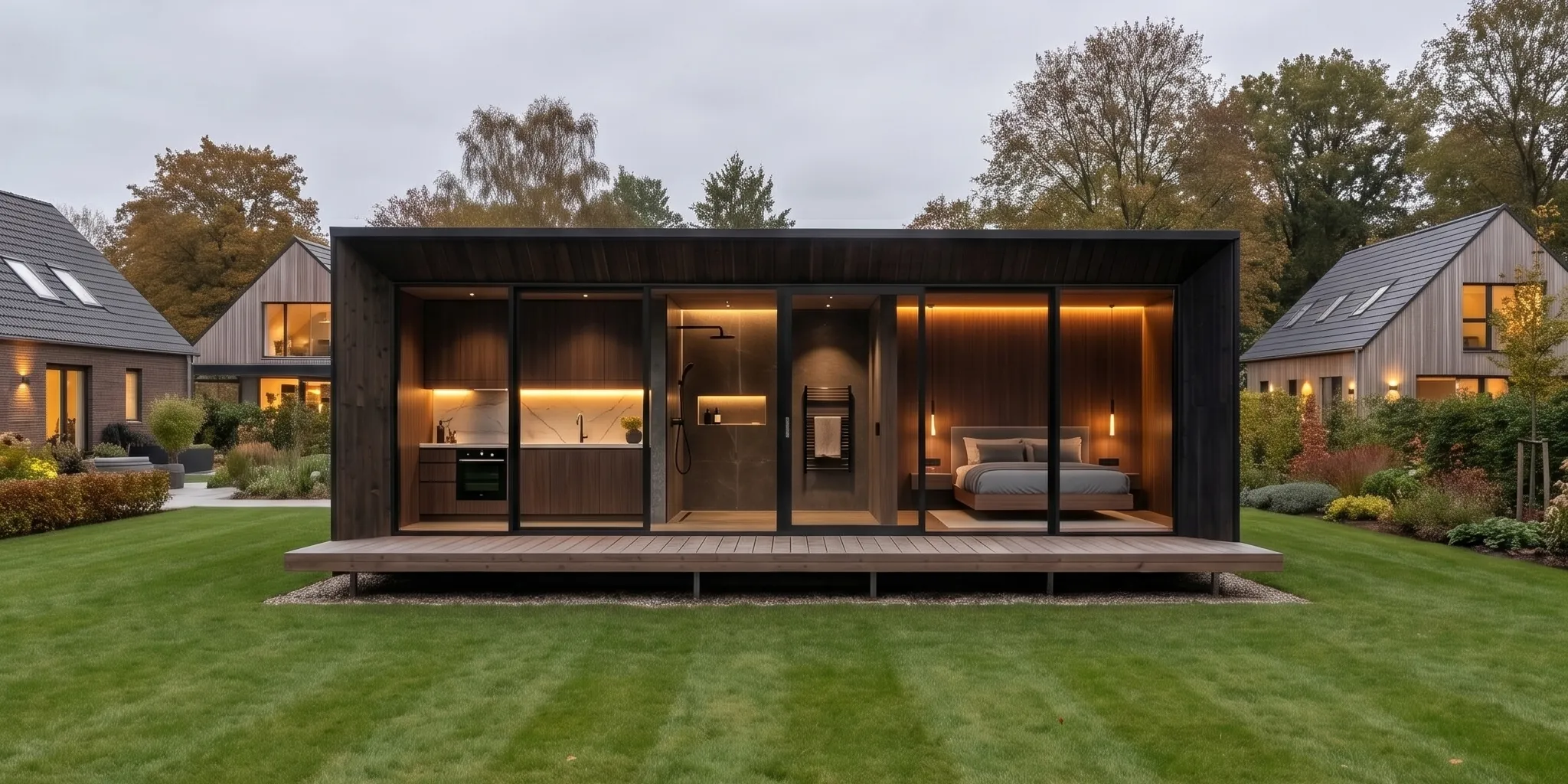
It doesn't anymore. The quiet revolution in how small buildings make their own power, hold their own warmth, and manage their own water means a cabin can stand entirely on its own in the middle of nowhere — and feel, inside, like the most cosseting room you've ever been in. The wilderness on the outside; nothing missing on the inside.
Power from the sky
A modern, well-insulated cabin asks remarkably little of the world to run. It isn't trying to heat a draughty mansion or light a dozen empty rooms. It's a single, efficient space — and a single efficient space is exactly what the sun can comfortably keep going.
Panels gather the day; a battery quietly holds it for the evening. The result is a place that lights itself, charges your devices, and runs its comforts without a cable to anywhere. There is a particular satisfaction in switching on a lamp at dusk and knowing the light came from that afternoon's sun, caught and kept on your own roof.
Warmth you can see
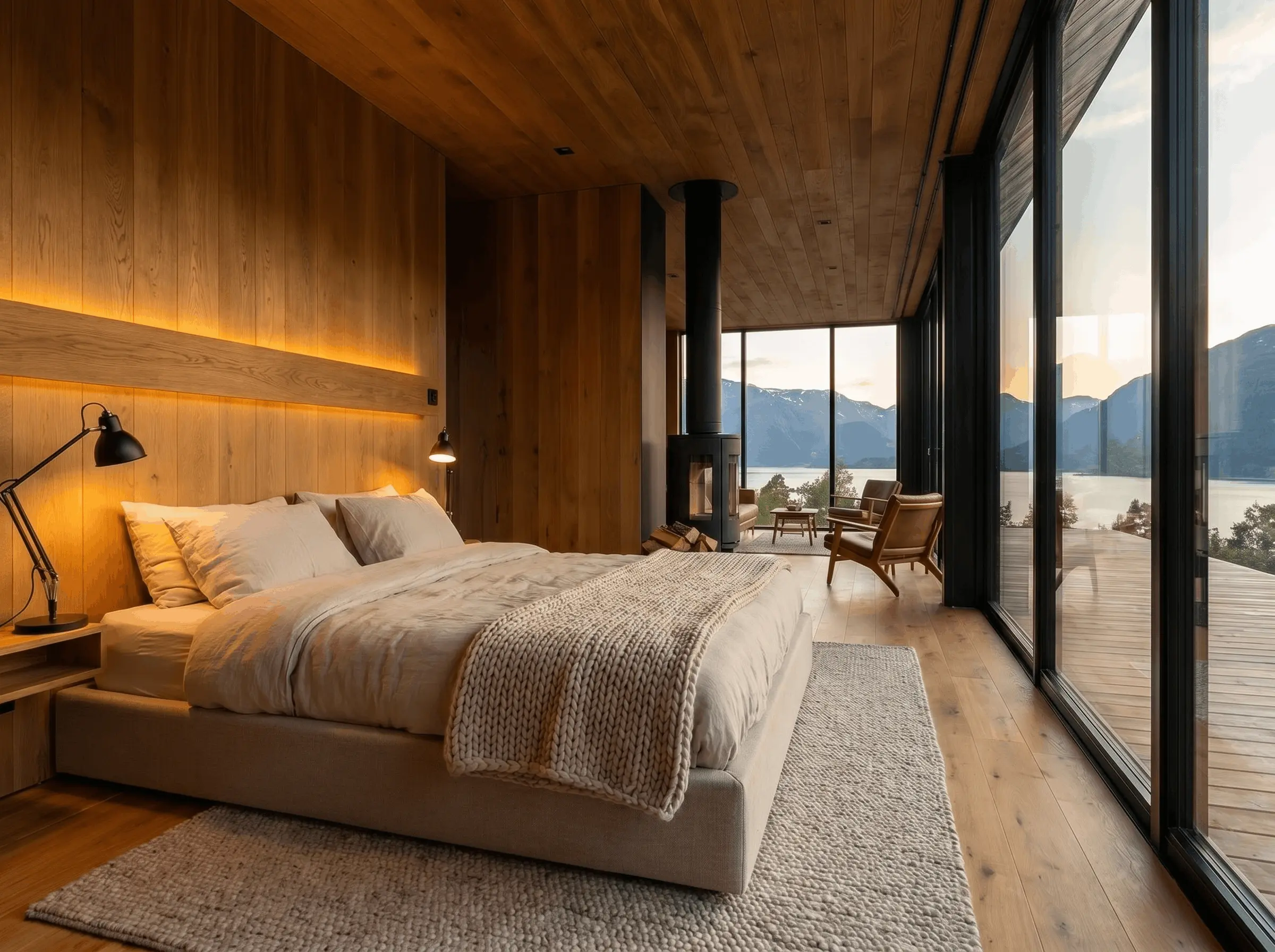
Heat is where off-grid living becomes a pleasure rather than a compromise. A small space holds its warmth beautifully when it's built tight and dressed in natural materials — timber underfoot, wool on the bed, the day's sun stored in the room.
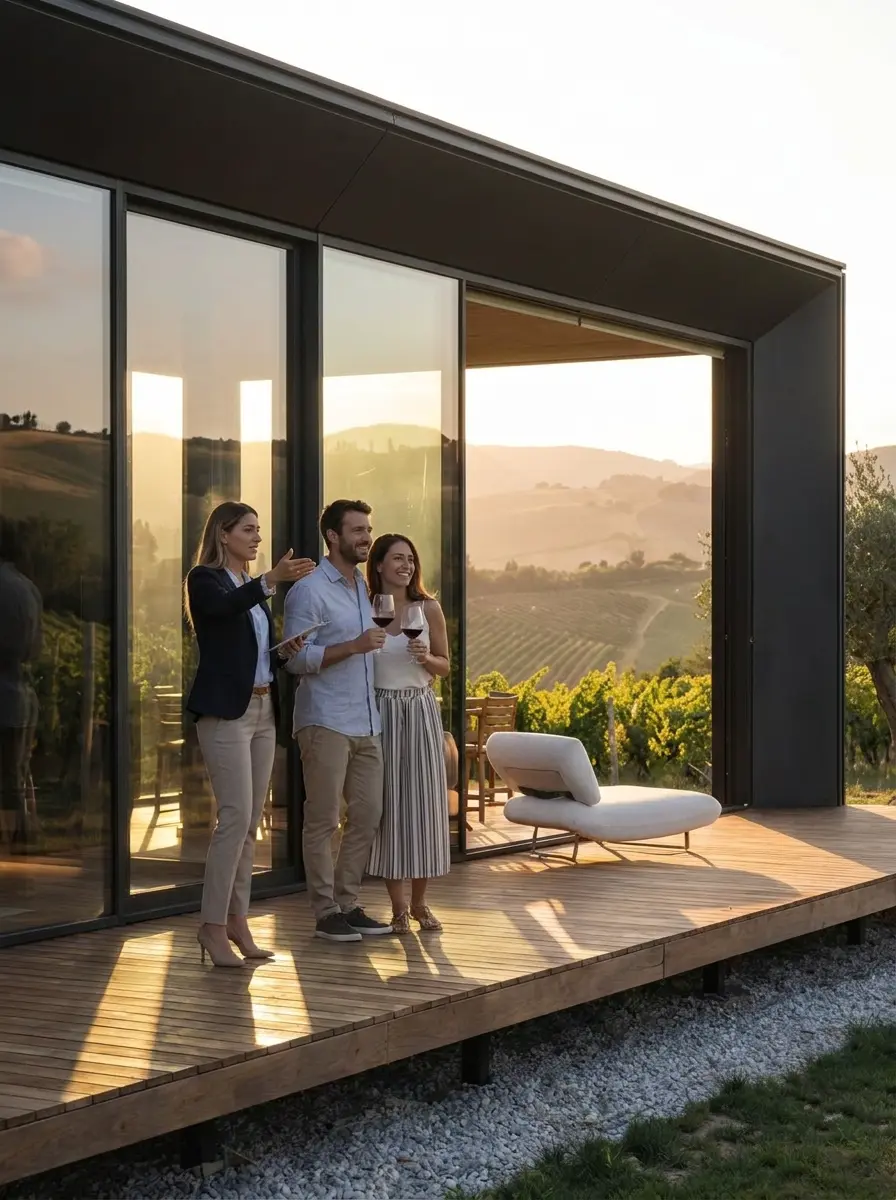
And then there's the fire. A wood-burning stove is the oldest and still the finest off-grid technology there is: heat, light, and a kind of animal comfort no thermostat can match. Watching flame against the backdrop of a snow-quiet forest or a darkening vineyard is not roughing it. It's one of the great luxuries, and it happens to be entirely self-sufficient.
Water, handled quietly
The least glamorous part of independence is also, now, the least troublesome. Collected and stored water, efficient fittings that make a little go far, and clean, considered systems mean a hot shower in the middle of nowhere is simply a hot shower — no different in feel from one in the city, except for what you can see through the window while you take it.
The infrastructure stays out of sight and out of mind, which is exactly where good infrastructure belongs. You're never aware of how the comfort is delivered. You're only aware of being comfortable.
Why less plumbing means more freedom
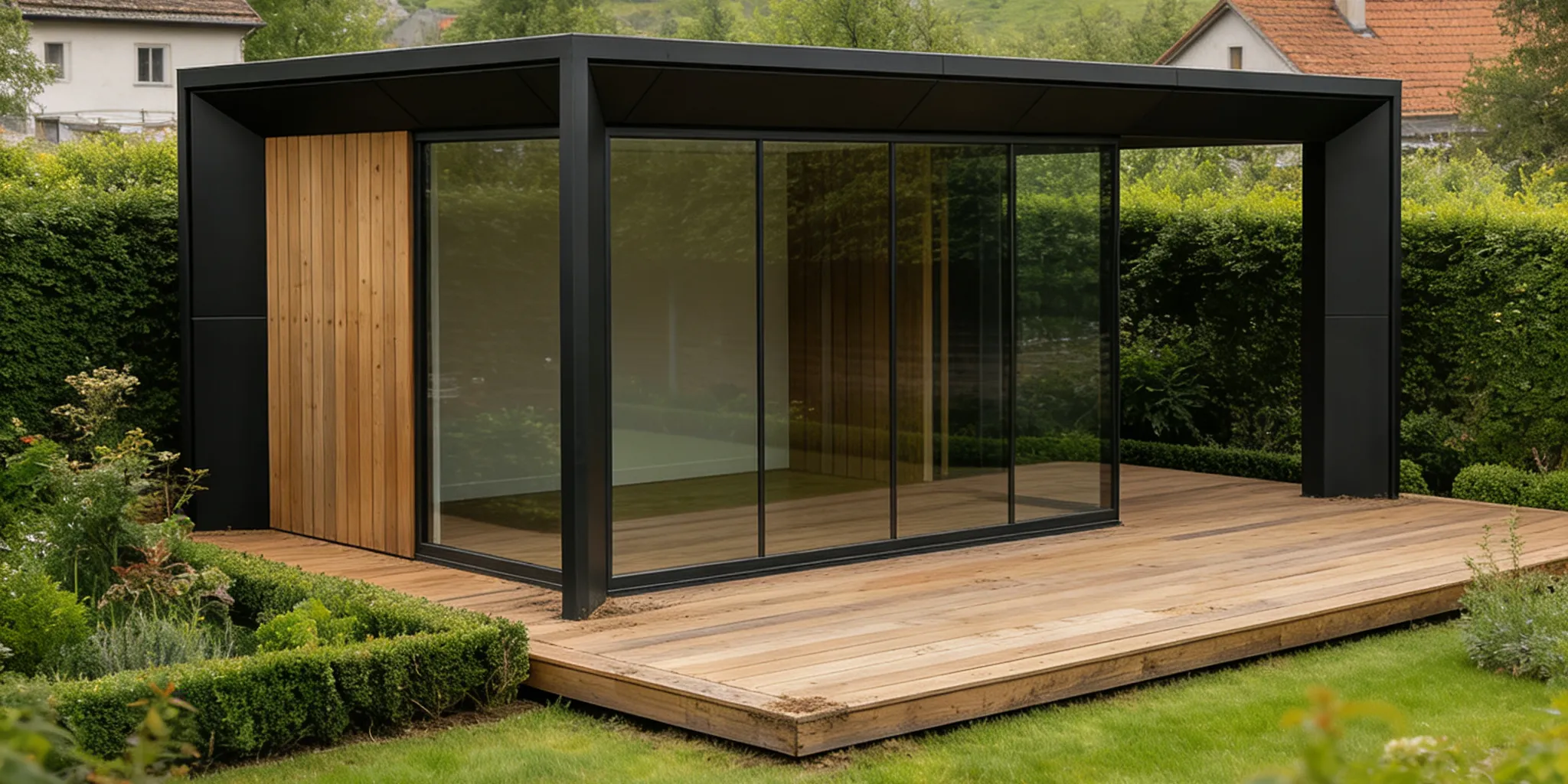
Here is the part that surprises people: needing less is what sets the cabin free. A building that makes its own power and manages its own water isn't tethered to a road, a mains connection, or a utility company. It can stand in the places those things can't reach — the high meadow, the far edge of the land, the spot with the impossible view that no one ever built on because the cables wouldn't run there.
Independence, in other words, isn't a sacrifice you make. It's the thing that unlocks the best sites in the world. The most beautiful spots are usually the least connected, and an off-grid cabin is the key that fits those locks.
Self-sufficient, never spartan
The old trade-off — comfort or wilderness, one or the other — has quietly dissolved. You no longer choose between a place that's deeply remote and a place that's deeply comfortable. Done well, a cabin is both at once: alone in the landscape, and wanting for nothing.
That is the real luxury of standing apart from the grid. Not the romance of doing without, but the quiet confidence of doing without nothing — warm, lit, washed and rested, in a place the wires never reached.