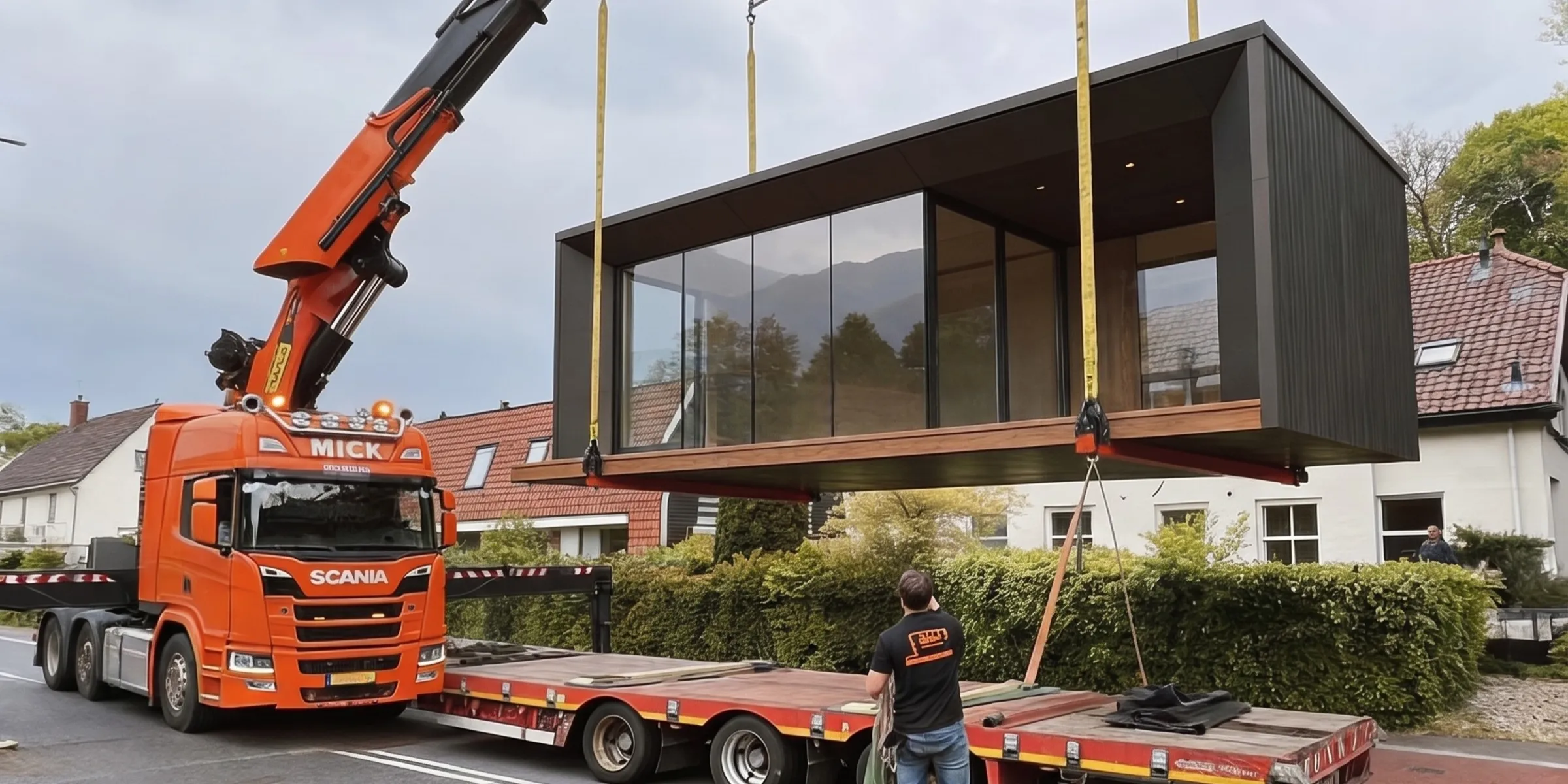
The Day the House Arrives
Most homes take a year to build. A Winbaum lands in an afternoon.
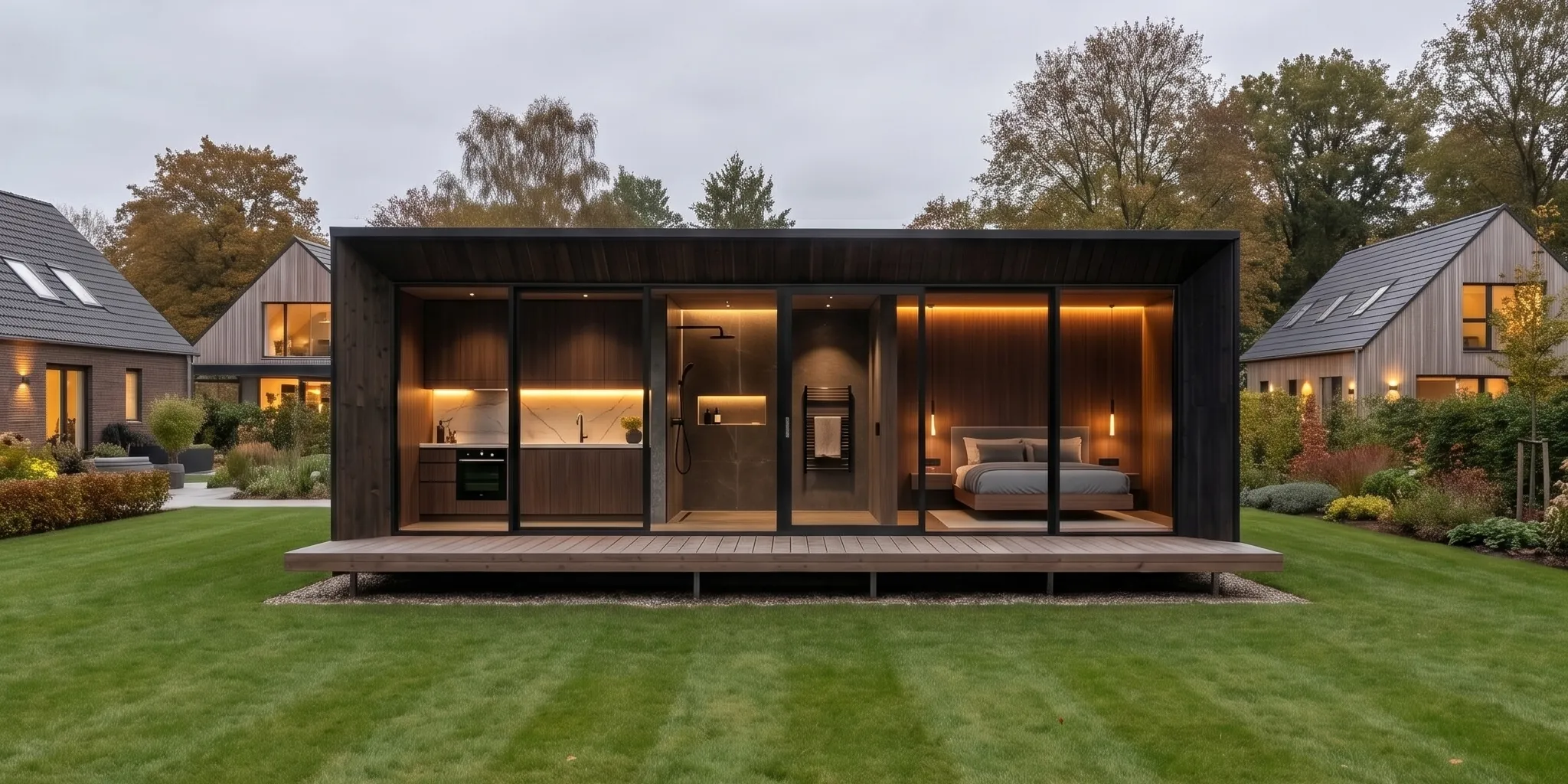
There is a moment, on the day a Winbaum is delivered, that people don't forget. A truck eases up the lane. On its back, wrapped and strapped, is something that looks far too composed to be a building site. Then the crane unfolds its arm, the straps go taut, and a finished room lifts clean into the air — glass, timber, roofline and all — and hangs for a few seconds against the sky before being set down, gently, exactly where it was always meant to be.
It is the opposite of construction as most people know it. No churned mud for months on end. No skips, no scaffolding, no slow accumulation of dust and delay. The house simply arrives, the way a beautiful object arrives — whole.
Built somewhere better than your garden
The trick behind that effortless landing is that the hard part happened long before the truck set off. The cabin was made in a workshop, indoors, under controlled conditions — assembled by people who build the same considered volume again and again until every joint is right.
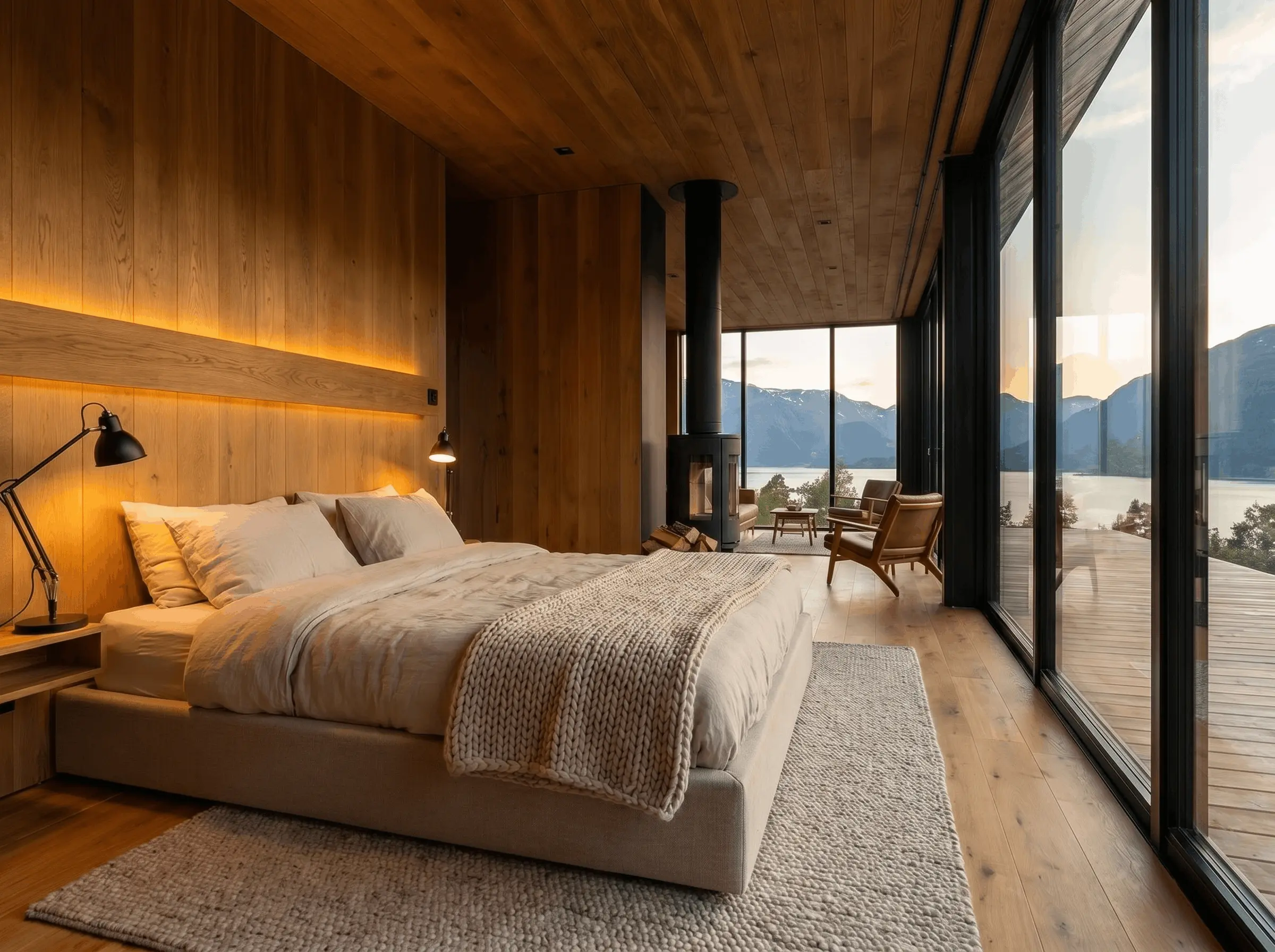
That matters more than it sounds. Weather doesn't interrupt a workshop. Materials stay dry and true. The fine tolerances that make a space feel resolved — the way a door meets its frame, the way light sits on a wall — are far easier to achieve on a clean factory floor than in a field in the rain. By the time your cabin reaches you, it has already lived a whole quiet life of being made well.
A single, civilised day
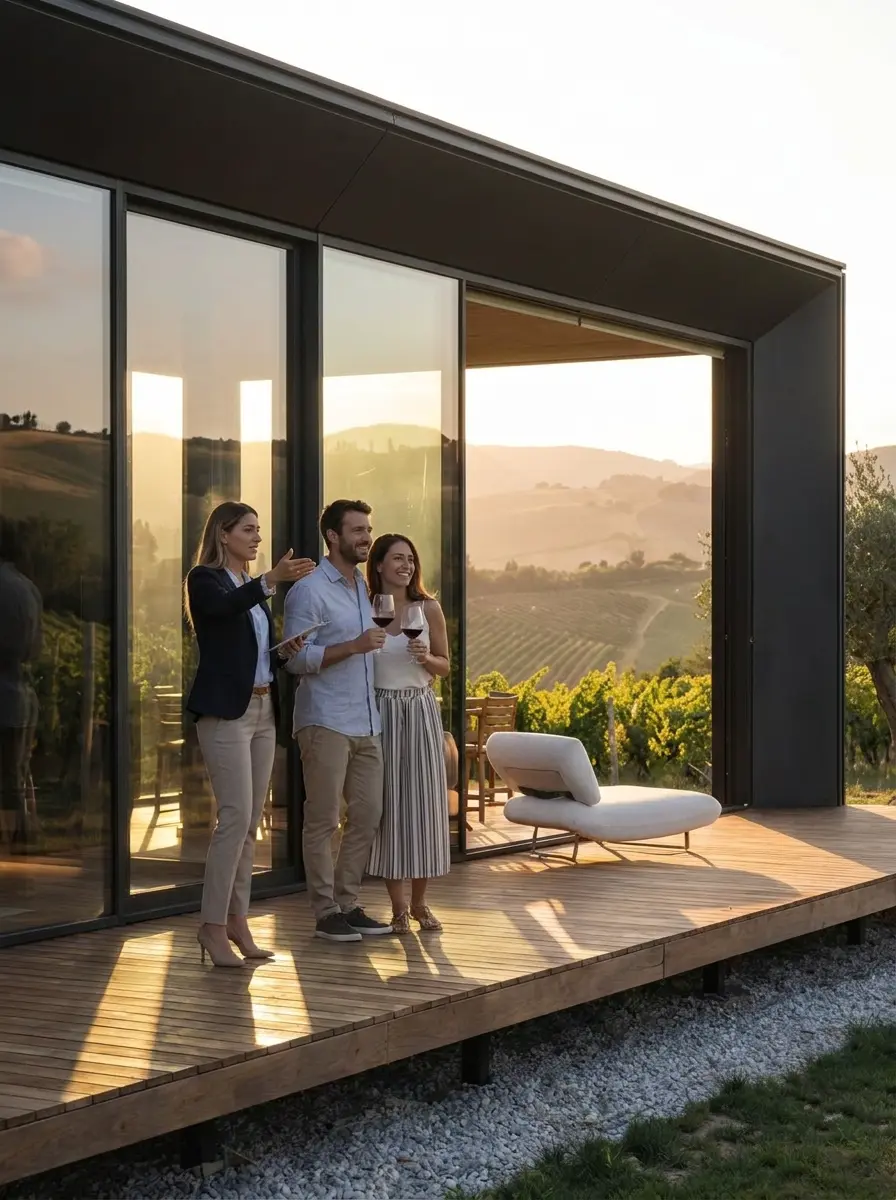
For the people who own the land, the day itself is almost anticlimactic in the best way. What might have been a year of disruption becomes a morning of quiet drama and an afternoon of calm. The module is positioned. It's levelled and secured. Services are connected. And then, remarkably, it's done — a finished space standing where there was open ground at breakfast.
Neighbours don't endure months of noise. The landscape isn't torn up and slowly stitched back together. The earth around the cabin stays largely as it was, because so little had to be done to it. There's a gentleness to the whole event that suits the thing being delivered.
Light on the land, and not for long if you don't want
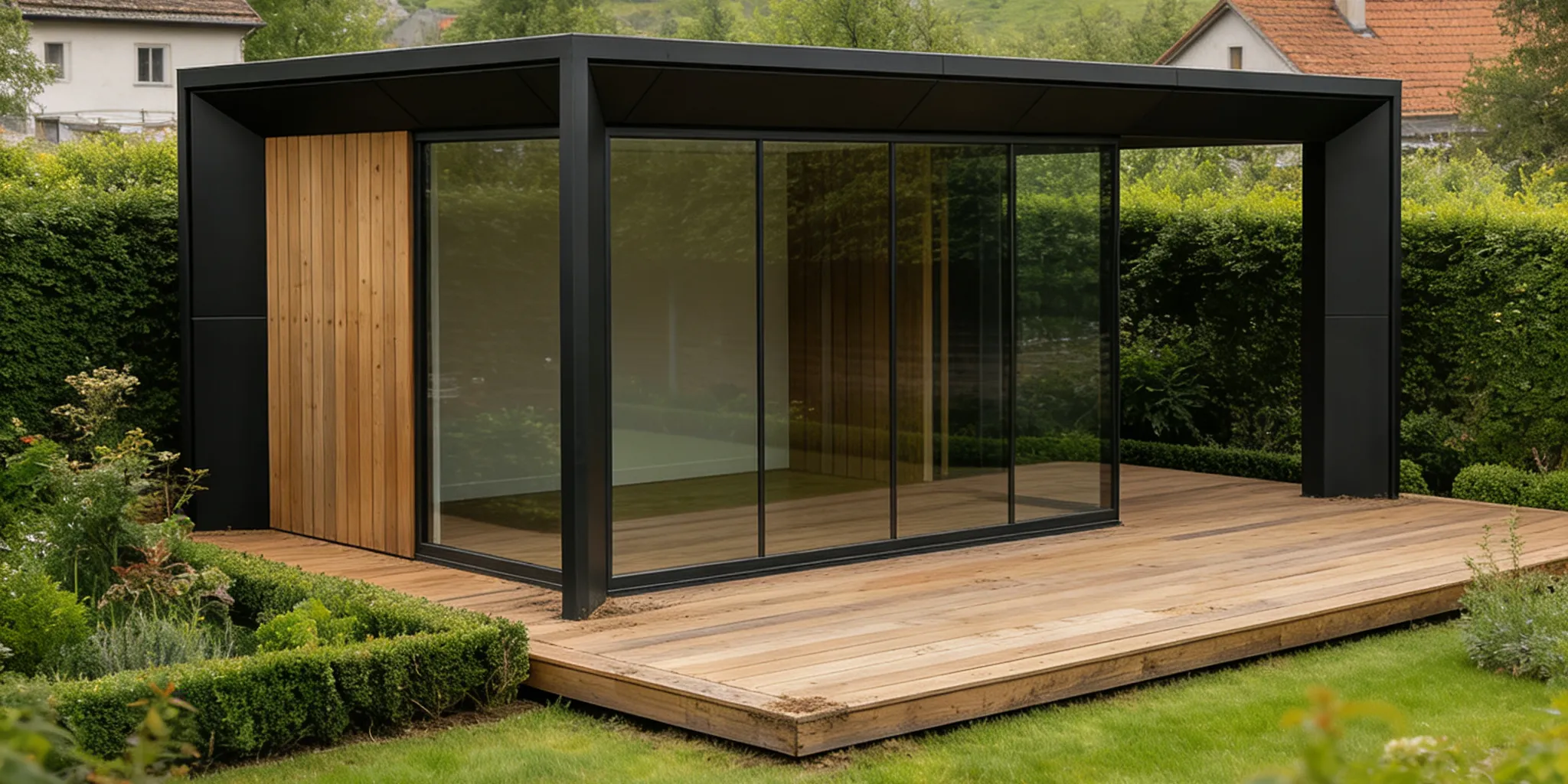
Because a Winbaum is placed rather than poured, it keeps a kind of freedom that permanent building gives away. It rests on the ground rather than burying itself in it. The site can often be returned, in time, to something close to how it began. And if your life changes — a new view, a new plan, a new piece of land — what was set down can, in principle, be lifted again.
That reversibility is a quiet luxury of its own. You are not making an irreversible mark. You are placing something beautiful, lightly, with the option to think again.
Why this is the future of building well
We have spent a long time accepting that good architecture has to be slow, messy, and final. Modular building quietly dismantles all three assumptions. It can be fast without being cheap. Clean without being soulless. Considered without taking a year of your life to deliver.
What you lose is the dust and the waiting. What you keep is the craft — arguably more of it, made under better conditions than any site could offer. The crane lifts away the worst parts of building and leaves you only with the best part: the moment the place is suddenly, completely there.
It's worth being present for. Bring a coffee. Watch your cabin fly.